















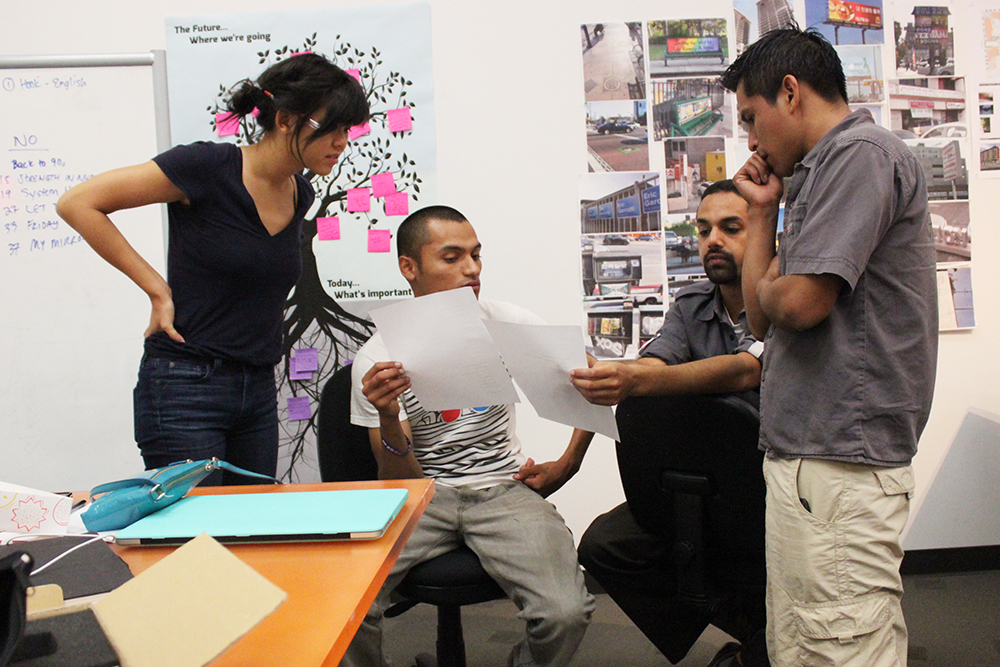
This chapter, coauthored with three alumnae from the MDP/Field program, looks at the ways digital methods can be used in relational ways, in the course of working with homeless youth in Boyle Heights, Los Angeles.
Institutional Review Boards have evolved into bodies working harder to indemnify institutions than to protect research participants. The implications for activist feminist ethnographers are often frustrating because our work is often deeply engaged. Counterintuitively, the neoliberal setting of private industry may offer us more freedom than the academy, supporting our research agendas in unexpected ways.
YouTube is full of hilarious Barbie Sex videos made by children. I examine one of my favorites in this chapter, to argue that kids are smart, savvy, and have lots of technical skills.
Children can be native ethnographers, and in the course of teaching kids how to do ethnographic research, I have learned a great deal about doing anthropology into the bargain.
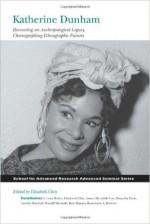
This book of essays was the result of an Advanced Research Seminar at the School for Advanced Research in Santa Fe, NM. Participants were myself, Robert Adams, Lynn Bolles, Aimee Cox, Dana-Ain Davis, Kate Ramsey, and Rosemarie Roberts. You can see video and other material from the seminar and our week in Santa Fe here.
This book explores Katherine Dunham’s contribution to anthropology and the ongoing relevance of her ideas and methodologies, rejecting the idea that art and academics need to be cleanly separated from each other. Drawing from Dunham’s holistic vision, the contributors began to experiment with how to bring the practise of art back into the discipline of anthropology – and vice versa.
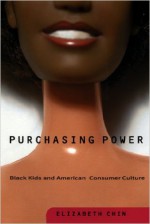
Back Cover Copy — What does it mean to be young, poor, and black in our consumer culture? Are black children “brand-crazed consumer addicts” willing to kill each other over a pair of the latest Nike Air Jordans or Barbie backpack? In this first in-depth account of the consumer lives of poor and working-class black children, Elizabeth Chin enters the world of children living in hardship in order to understand the ways they learn to manage living poor in a wealthy society.
In order to move beyond the stereotypical images of black children obsessed with status symbols, Elizabeth Chin spent two years interviewing poor children living in New Haven, Connecticut, about where and how they spend their money. An alternate image of the children emerges, one that puts practicality ahead of status in their purchasing decisions. On a twenty-dollar shopping spree with Chin, one boy has to choose between a walkie-talkie set and an X-Men figure. In one of the most painful moments of her research, Chin watches as Davy struggles with his decision. He finally takes the walkie-talkie set, a toy that might be shared with his younger brother.
Through personal anecdotes and compelling stories ranging from topics such as Christmas and birthday gifts, shopping malls, Toys-R-Us, neighborhood convenience shops, school lunches, ethnically correct toys, and school supplies, Chin critically examines consumption as a medium through which social inequalities-most notably of race, class, and gender–are formed, experienced, imposed, and resisted. Along the way she acknowledges the profound constraints under which the poor and working class must struggle in their daily lives.
Check out my most recent Amazon review:
By Olivia Glenn on January 5, 2015
Format: Paperback Verified Purchase
For more than 30 years now, I have been studying and performing Haitian folkloric dance. This video is from a performance at the University of Florida in 2012. These are the dances of the Haitian vodou, born of the enslaved people brought to the island of Hispaniola. The dances are an embodied history and present-day form through which people experience, embed, move, and consecrate their lives. I first began studying Haitian dance in New York City in the early 1980s, and it turns out it was an exceptionally lucky accident that a friend dragged me into class (until then I had studied only classical ballet and several styles of modern dance). Without knowing it, I was studying with the founder of Haiti’s national ballet, the incomparable Jean Léon Destiné. He had also been a member of Katherine Dunham’s company, and it was through him and through Haitian dance that I first became interested in Dunham’s life and work. After I moved to Los Angeles, I founded a Haitian dance troupe, and we performed for over 10 years throughout Southern California and in Haiti. I also was lucky to study with Elle Johnson, who had also been a Dunham student in the 1940s in New York, and who was good friends with Destiné. When Elle moved to Los Angeles in the early 1950s, she joined the Lester Horton company.





 elizabethjchin.com